
SWIFT Code FNOONOK1XXX Details & Bank Information
FNOONOK1XXX is a SWIFT Code used in Norway for sending and receiving international wire transfers and payments from and to various countries. Here is everything you need to know about SWIFT Code FNOONOK1XXX and how it enables global banking in Norway.
SWIFT Code FNOONOK1XXX
FNOONOK1XXX is a SWIFT Code used by NORDIC FINANCIAL CERT in Norway.
Here is everything you need to know about FNOONOK1XXX.
NORDIC FINANCIAL CERT SWIFT Code FNOONOK1XXX Format And Parts
FNOONOK1XXX captures a lot of useful information, and the table below breaks down its constituent parts.
Notice how FNOONOK1XXX comprises individual pieces related to bank, country, location and branch code. In that regard, FNOONOK1XXX complies with the ISO 9362:2014 standard that defines SWIFT Code format.
| SWIFT Code / BIC Code (8 characters) | FNOONOK1 |
| SWIFT Code / BIC Code (11 characters) | FNOONOK1XXX |
| Bank Name | NORDIC FINANCIAL CERT |
| Bank Address | HANSTEENS GATE 2 OSLO 0203 NORWAY |
| Country | Norway |
| Bank Code | FNOO |
| Country Code | NO |
| Location Code | K1 |
| Branch Code | XXX |
The diagram below shows the sub-parts of a SWIFT Code such as FNOONOK1XXX.
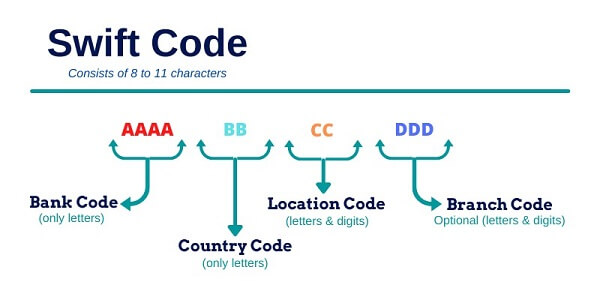
If we apply the above formatting guidelines to FNOONOK1XXX, we get the following breakdown:
- Bank Code: FNOO
- Country Code: NO
- Location Code: K1
- Branch Code: XXX
NORDIC FINANCIAL CERT SWIFT Code FNOONOK1XXX adheres to the SWIFT Code specification, and carries highly useful information in its format and constituent sub-parts. This helps route funds efficiently from and to NORDIC FINANCIAL CERT in Norway.
Even though we strive our best to ensure NORDIC FINANCIAL CERT SWIFT Codes (like FNOONOK1XXX) are up to date on our website, we still recommend that you validate them with NORDIC FINANCIAL CERT before using the same.
To ensure you have latest information, make sure you double check your NORDIC FINANCIAL CERT SWIFT Code FNOONOK1XXX before using it.
How To Find The SWIFT Code or BIC Code For My Bank?
If you wish to make an international wire transfer from one bank to another, you will need the SWIFT Code (also called the BIC Code) for the recipient bank. Here are some easy ways using which you can find the SWIFT/BIC Code for your bank:
- By calling your bank to ask for their SWIFT Code.
- By logging in to their mobile app or website.
- By checking the FAQs or wire transfer section of your bank's website.
- By check the hard copy of your bank account statement.
- By searching online registries of SWIFT/BIC codes.
- By using RemitFinder's SWIFT/BIC Code registry.
You can use your bank to send and receive funds internationally, there are many other easy ways to do so. Banks often charge high fees and provide low exchange rates for international wire transfers. A better option is to use international money transfer companies to get the best exchange rates and pay low transfer fees.
What Is The Format Of A SWIFT Code or BIC Code?
SWIFT and BIC Codes comply with the 9362:2014 standard that defines their format. As per this specification, a SWIFT or BIC code is a unique 8-character combination (or 11-character when it also contains a bank branch code).
Each set of these 8 or 11 characters provide useful information about the organizations involved in an international wire transfer. The constituent characters in SWIFT and BIC Codes follow a certain specified order in their arrangement and have the following important sub-parts:
- The first 4 characters (only letters) represent the bank or financial organization identification code.
- The next 2 characters (only letters) capture the ISO2 country reference code where the bank is located.
- The next 2 characters (letters & numbers) stand for the area/city code where the bank or the financial organization is located.
- The last 3 characters (numbers & letters) are reserved for an optional reference code that specifies the exact division, branch, office or administration unit of the concerned financial institution.
SWIFT or BIC Codes are 8 or 11 character long and contain information about the bank, country, area/city and branch code for the particular financial institution.
Here is a diagram that captures the structure of a SWIFT or BIC Code in a pictorial format.
The application of the above guideline to FNOONOK1XXX provides the below constituent parts:
1) Bank Code: FNOO
2) Country Code: NO
3) Location Code: K1
4) Branch Code: XXX
There are a lot more details about SWIFT Codes and BIC Codes. If you are interested in learning more, check out our comprehensive guide on IBANs, SWIFT Codes and BIC Codes below.
Frequently Asked Questions About SWIFT Codes
What Is FNOONOK1XXX?
FNOONOK1XXX is a SWIFT Code, also called BIC Code, and is used by NORDIC FINANCIAL CERT located in Norway.
What Is FNOONOK1XXX Used For?
FNOONOK1XXX is used for sending and receiving international wire transfers using the SWIFT network from and to bank accounts held at NORDIC FINANCIAL CERT in Norway.
Which Bank Uses FNOONOK1XXX?
FNOONOK1XXX is a SWIFT Code used by NORDIC FINANCIAL CERT located at HANSTEENS GATE 2 OSLO 0203 NORWAY. NORDIC FINANCIAL CERT is a financial institution in Norway.
Are There Variants Of FNOONOK1XXX?
Yes, you can use either the 8-character version or the 11-character version of SWIFT Code FNOONOK1XXX – these are FNOONOK1 and FNOONOK1XXX, respectively. The 11-character version, FNOONOK1XXX, supplements the 8-character version, FNOONOK1, by adding the 3-character branch code XXX.
What Information Does FNOONOK1XXX Contain?
FNOONOK1XXX is a SWIFT Code, also called BIC Code, and carries the following information in its format and structure - Bank Code FNOO, Country Code NO, Location Code K1 and Branch Code XXX.
How Can I Find SWIFT Codes For Banks In Norway?
There are various ways to find SWIFT Codes for various banks in Norway. These include looking at your bank account statement, calling your bank, checking online SWIFT Bank registry sites or relying on RemitFinder's SWIFT Code lookup tool.
How Many Banks Have SWIFT Codes In Norway?
There are numerous banks that use SWIFT Codes In Norway. Check out the table presented earlier on this page to check out SWIFT Codes used by various banks in Norway.
What Is A SWIFT Code?
A SWIFT Code is globally unique number for a financial organization and serves as a global messaging address for that organization. SWIFT Codes are issued, managed and maintained by the Society for Worldwide Interbank Financial Telecommunication (SWIFT), an association that maintains a global finance-related data-sharing network.
What Is A SWIFT Code Used For?
Since a SWIFT Code is a unique ID for a financial institution, it is extremely helpful in routing money accurately. As a result, SWIFT Codes are used to process international wire transfers, a mechanism to send money from one bank to another anywhere in the world.
What Is A BIC Code?
A BIC (Business Identifier Code) is a unique identification number comprising of eight digits and letters (or 11 if the bank branch ID is also included) that helps to unambiguously identity a financial institution worldwide. BICs are primarily used as messaging addresses for the financial organizations participating in global payments and financial transactions.
Are BIC And SWIFT Codes Different?
No, BIC and SWIFT Codes are not different from each other, but represent the same concept. In addition to being called SWIFT Codes and BIC Codes, these codes are also known by some other common names like SWIFT ID/address and SWIFT-BIC. The SWIFT network relies on SWIFT Codes and BIC Codes for seamless and accurate movement of money and payments across the world.
What Is The Format Of A SWIFT Or BIC Code?
A SWIFT or BIC code is a unique 8 digits-letters combination (or 11 when it also contains a bank branch code) and contains the following sub-parts: the first 4 characters (only letters) represent the bank or organization identification code, the next 2 characters (only letters) capture the ISO2 country reference code, the next 2 characters (letters & numbers) signify the area/city code where the bank or the financial organization is headquartered and the last 3 characters (numbers & letters) are reserved for an optional reference code that specifies the exact divisions, offices or administration units of the concerned financial institution.
How Can I Find The SWIFT Code For My Bank?
To find your bank's SWIFT Code, you can check your bank account statement, call your bank, visit their website, search on the internet or check out RemitFinder's free SWIFT Code lookup tool.
Is There A Better Alternative To International Wire Transfers?
International wire transfers are convenient but costly as bank generally provide low exchange rates and charge high fees. A better alternative is to rely on international money transfer companies that provide competitive exchange rates and charge very low fees. This enables you to save more on your international money transfers.