
eSIM Vs Physical SIM :All You Need To Know
Table of Contents
- What Is The Difference Between eSIM And Physical SIM?
- Is A Normal SIM Card Compatible With eSIM?
- How To Check If I Have An eSIM Or Physical SIM?
- Is eSIM Better Than Physical SIM?
- Do You Need A Physical SIM For eSIM?
- eSIM Vs Physical SIM Pros And Cons
- What are the pros of eSIMs?
- What are the cons of eSIMs?
- What are the pros of physical SIMs?
- What are the cons of physical SIMs?
- Should I Use eSIM Or Physical SIM?
- RemitFinder's Key Takeaway: eSIMs Are Here To Stay
The mobile connectivity industry is experiencing a silent revolution.
eSIM (short for Embedded SIM) technology is replacing physical SIM cards, especially for remote connectivity needs for international travel.
Many people are not aware of this important evolution in the mobile space. In our opinion, this is one of the most significant change that the mobile connectivity industry has seen since the transition from 3G to 4G, and recently from 4G to 5G.
Are you a finance manager, a CEO, a professional or a frequent traveler who is constantly on the move? Regardless of your role, staying connected is a critical factor in your daily success. For years, physical SIM cards were our only choice for connecting to a network.
Now, a new player has entered the scene: the eSIM.
This shift may change how you manage your mobile life. It is about making smart choices for your communication needs and staying ahead in today's highly connected world.
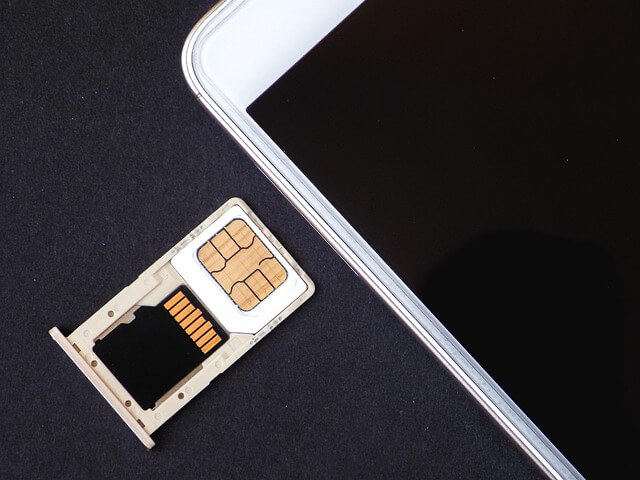
In this article, we will analyze every aspect of the differences between an eSIM and a physical SIM.
What Is The Difference Between eSIM And Physical SIM?
eSIMs and physical SIMs differ in various ways that include their underlying technology, structure, activation process and even size. Let us look at a few of these key differences below.
What is a Physical SIM?
A physical SIM card is a small plastic card that you insert into a slot on your device. You may be more familiar with this type of SIM.
The physical SIM card holds all the important information your mobile network needs to recognize you; this includes the below:
- The ICCID, short for Integrated Circuit Card Identifier, which is a unique ID for your SIM card.
- The IMSI, short for International Mobile Subscriber Identity, which uniquely identifies your mobile phone subscription.
Typically, activation involves manual insertion and following a few steps, and sometimes, a visit to a carrier store.
A physical SIM card is physically inserted into a SIM card slot on your mobile, and carries critical information that identifies the SIM as well as your mobile subscriber identity.
What is an eSIM?
Unlike a regular, physical SIM card, an eSIM is not a physical card. The 'e' stands for 'embedded,' meaning it is a built-in chip that comes installed within your device hardware.
Instead of inserting a physical card into your phone, an eSIM allows you to download and activate your mobile plan digitally. Usually, activation occurs by scanning a QR code, using a carrier-specific application, or following a few steps in your phone settings.
This digital approach makes switching carriers or activating new plans fast and convenient.
If you a busy professional who travels overseas, or if you need a second line or getting connected in a new country, an eSIM can provide flexibility and less downtime.
eSIM stands for embedded SIM and is a chip that is built-in into your mobile phone. eSIM plans are activated digitally and switching plans or providers can be done seamlessly without swapping physical cards.
How are eSIMs different from Physical SIMs?
Based on the above analysis, we break down the key differences between eSIMs and physical SIMs in the table below.
We will also include eSIM vs physical SIM device support for various types of devices as the implications run much deeper when it comes to which devices support which type of SIM.
| Category | Physical SIM | eSIM |
|---|---|---|
| Form factor | Removable cards (Mini, Micro, Nano) | Permanent, built-in chips |
| Activation | Requires manual insertion | Activated digitally, often over the air |
| Management | Must swap cards | Manage profiles digitally within device software |
| Durability | Can be lost, damaged, stolen, or bent | Secure inside your device and will not suffer physical wear and tear because of handling |
| Device Support - Smartphones (2020+) | Nearly universal | iPhone XS, XR, and 12+, Google Pixel 4+, Samsung Galaxy S20+ |
| Device Support - Tablets | Most cellular model | iPad Pro/Air (2018+), Samsung Galaxy Tab S9/Active/Book series, Microsoft Surface Pro 8/9/X |
| Device Support - Wearables | Extremely rare | Google Pixel Watch 2/3/LTE, Apple Watch Series 3+, Samsung Galaxy Watch 3+ |
| Device Support - IoT* Devices | Legacy systems only | Many industrial, modern IoT solutions |
* IoT stands for "Internet of Things"
eSIMs and physical SIMs vary in many ways that include their underlying technology format, shape, size, activation and management. Equally importantly, both types of SIMs have significant variations when it comes to device support.
Now that you are aware of the key differences between physical SIMs and eSIMs, we will delve into additional related topics below.
Is A Normal SIM Card Compatible With eSIM?
eSIMs and physical SIM cards are incompatible with each other because they use different network authentication mechanisms. Hence, they cannot work in the same slot.
Still, many modern smartphones support "Dual SIM" functionality, allowing a device to operate with both a physical SIM and an eSIM concurrently.
This feature is beneficial for business professionals and frequent travelers since, for example, you can:
- Keep your primary business number on a physical SIM while adding a separate personal line via an eSIM.
- Use your primary physical SIM for your domestic plan and then easily activate an eSIM for a data plan when traveling internationally. This way, you will avoid expensive roaming charges.
- Maintain two business lines for different regions or client bases.
Be aware that certain relatively new smartphones are "eSIM-only", which means they lack a real SIM card slot.
Alternatively, you can convert a physical SIM into an eSIM within the same device. You only need to determine two things: Whether your carrier offers eSIM service and whether your device supports eSIM functionality.
How To Check If I Have An eSIM Or Physical SIM?
Checking whether your phone has an eSIM or a physical SIM active is simple; you can do this by following one of the below two ways.
Checking your phone settings
- For iOS (iPhone) users:
- Tap the "Settings" icon on your home screen.
- Scroll down and select "General".
- Tap "About".
- Your iPhone supports eSIM if you see a section labeled "Available SIM" (on iOS 15 or later) or "Digital SIM" (on older iOS versions). You may see a 15-digit EID number there, which is the unique identifier for your embedded SIM.
- On newer iPhones, you might notice there is no physical SIM card tray on the side. This feature implies your phone is eSIM-only.
- For Android users:
- Open your "Settings" app.
- Look for options such as "Mobile network", "Connections", or "Network & Internet".
- Within these sections, look for "Add eSIM" or "Download a SIM". If you see these options, your device is compatible with an eSIM.
Using a Dial Code
- Open your phone dialer app.
- Type “*#06#” and press the call button. A screen should appear, showing your IMEI numbers. If your device supports eSIM, you will also see an "EID" (eSIM Identification Document) number listed.
You can also check this information in your device manual, the manufacturer's website, or by calling your mobile carrier.
Is eSIM Better Than Physical SIM?
Whilst there is no clear yes or no answer to this question, your mobile data usage needs and circumstances will determine which choice is better for you.
Due to its cost effectiveness by virtue of avoiding expensive roaming charges and quick and easy setup and activation, the eSIM is the go-to choice for many business professionals and frequent travelers. Yet, physical SIMs are still relevant and highly convenient in many situations.
Therefore, the debate - whether eSIM is better than physical SIM or vice-versa - really depends on your needs and circumstances. Below, we present reasons and scenarios when an eSIM or physical SIM might be a better choice.
When is an eSIM a better choice for me?
Here are the key areas where eSIMs stand out:
- Flexibility: Activating an eSIM plan is straightforward when visiting a foreign country. This attribute is very convenient for frequent travelers and business professionals.
- Security: If you misplaced your phone or if you think somebody stole it, the good news is that no one can take your eSIM away. You can simply get a new device and move your eSIM plan there.
- Managing multiple lines: Storing multiple carrier profiles digitally simplifies managing several phone numbers or international data plans. You will leave behind the inconvenience of swapping physical cards.
- Sleeker, more powerful devices: Since eSIM devices have no card trays, manufacturers can create sleeker and more water-resistant phones. Also, they can install larger batteries or advanced components in the space saved by not having physical SIM slots.
When is a physical SIM the way to go?
eSIMs are great, especially for overseas use. However, good old physical SIMs are probably not going away anytime some, here is why:
- Compatibility: Almost every phone ever made supports a physical SIM. This feature may be helpful if you frequently switch between different devices or loan your phone to others.
- Easy transfer: If your phone stopped working all of a sudden, getting back online is easy by taking your physical SIM and inserting it into another device.
- No Internet for Initial Setup: Activating a physical SIM is fairly easy in remote areas without Wi-Fi or data connection. On the other hand, an eSIM requires an internet connection to download its digital profile.
The choice between an eSIM and a physical SIM depends on your needs, preferences and circumstances. If you travel frequently and want to avoid roaming charges, an eSIM is definitely the way to go.
All said, we recommend that you should analyze and balance these factors. Ultimately, your individual needs should determine your choice.
Do You Need A Physical SIM For eSIM?
No, you do not need a physical SIM card for an eSIM to work.
The idea behind an eSIM is to eliminate the need for a removable card. Consider it as a digital replacement of a physical SIM.
Your mobile network operator transmits your subscriber identity module to the embedded chip in your device when you activate an eSIM. All the information your phone needs to work (make calls, send texts, and use data) is in this profile.
The eSIM itself does not need a physical SIM to function, even though many devices have dual SIM capabilities. However, this is a choice rather than a need. You can use a device with only an eSIM active. Similarly, any device with only a physical SIM card will continue to work.
eSIM Vs Physical SIM Pros And Cons
The shift from physical SIM cards to eSIM technology, especially for overseas connectivity needs, presents both benefits and challenges. Making an informed choice requires an understanding of multiple factors.
Below, we present various pros and cons of both eSIMs and physical SIMs.
What are the pros of eSIMs?
Here are the key areas where eSIMs score above physical SIMs:
- Enhanced flexibility: eSIMs give travelers freedom by saving you from the trouble of finding local SIM card stores and avoiding the high costs of international roaming. It means you do not have to worry about your connection and can spend more time on your work or leisure.
- Saving space: By removing the SIM slot from eSIM only devices, manufacturers can add larger batteries or improve water resistance by freeing up internal device space.
- Enhanced security: If you misplace your device, no one can steal your eSIM, which decreases the possibility of fraud.
- Multiple profiles: You can manage separate personal and work lines or various international plans from a single device.
- Suitable for IoT: Inserting a SIM in Internet of Things (IoT) devices may be impractical or even impossible. An eSIM is ideal in this case to ensure IoT data connectivity.
What are the cons of eSIMs?
Every new technology has some challenges, and eSIMs are no different. Here are some areas where we find eSIMs scoring lower than physical SIMs:
- Network compatibility: Although eSIM technology adoption continues to improve rapidly, not every mobile carrier supports it. Thus, even if you have a modern device that supports an eSIM, you may still have restricted carrier network options.
- Carrier support: Not every mobile network carrier in the world completely supports eSIM services. This also may limit options in some regions.
- Device support: Device supports for eSIMs continues to rapidly increase, but there are still many devices that do not support them yet. If you happen to have an unsupported device, you will not be able to use an eSIM, unfortunately.
- Internet needed for activation: To download, setup and activate your eSIM, you will need an internet connection (either via your mobile data plan or via Wi-Fi). As a result, eSIM activation may be challenging in regions with limited connectivity.
What are the pros of physical SIMs?
Physical SIMs are not going to go away anytime soon, and there are reasons for that; some of these are as follows:
- Broad compatibility: Practically, all mobile devices and carriers support physical SIM cards, guaranteeing widespread accessibility.
- Simple transfer: If you need to move your mobile service to a new device, you can do so easily by extracting the SIM card and inserting it into another phone.
- No internet needed for activation: Physical SIM activation is possible without an Internet connection. This is helpful for initial setup, especially in remote locations.
What are the cons of physical SIMs?
Here are some cons of physical SIMs that you should be aware of:
- Risk of loss: Physical SIMs are susceptible to theft, loss, and damage, and hence may pose risk of service outages, but also more seriously, identity theft and misuse of your mobile device and identity for malicious purposes.
- Manual handling: Manually inserting and removing SIM cards can be a trouble. You may accidentally damage or lose the SIM card before transferring it to a new device. This factor is relevant if you frequently change carriers or handle many numbers when abroad.
- Limited flexibility: Managing several subscriptions or switching networks entails purchasing and swapping various physical cards.
- Space consumption: By occupying limited and important internal space in a device, the physical SIM card slot limits device design advancements.
As you can see, no technology is without pros and cons, and eSIMs and physical SIMs are no exception. Given that, how do you decide which one to use? We present some best practices in the next section.
Should I Use eSIM Or Physical SIM?
Deciding whether to embrace eSIM or stick with a physical SIM comes down to your lifestyle.
If your life or work involves frequent international travel, the eSIM is a clear winner. This is because you will save hundreds on international roaming charges.
Furthermore, if you manage separate phone lines for different purposes (personal vs work) or regions (one business region vs another), an eSIM will simplify your life by reducing the need to carry multiple phones and physical SIM cards.
If you have needs like frequent overseas travel and having multiple phone lines and connections, an eSIM is a better choice for you as it provides massive cost savings on overseas use as well as flexibility to have multiple connections on a single device.
If you rarely travel internationally, or prefer simplicity of physical SIMs, or do not mind swapping your SIM card between different devices, the physical SIM might be a better choice.
Often, business travelers need to keep personal and work email and data separate, and hence have to carry 2 phones. In such cases, the physical SIM offers a simple, familiar experience.
RemitFinder's Key Takeaway: eSIMs Are Here To Stay
Looking ahead, the trend is clear: eSIM is the future of mobile connectivity, especially when traveling overseas.
We are all familiar with roaming horror stories where even a few days of overseas mobile roaming usage can incur several hundreds of roaming charges.
Whilst buying local plans and sticking with Wi-Fi are decent workarounds, the core problem of paying expensive roaming charges continues to be a dreaded scenario for anyone traveling abroad and needing reliable mobile connectivity.
This is where the eSIM technology proves to be a game changer.
Instead of paying high roaming charges, what if you could get access to fast, high quality data abroad at a fraction of the cost!
The eSIM technology means staying connected and staying ahead, especially when abroad, at a cost that is easily affordable.
Make sure to keep the eSIM in mind for your next overseas trip.
Do You Need To Find A Reliable And Cost-Effective Data Plan For International Travel?
RemitFinder is an online service that helps you compare eSIM data plans from numerous eSIM providers. By comparing various eSIMs, you can get the best eSIM for your trip and ensure you stay connected when overseas. RemitFinder, thus, helps you to get the best eSIM for international travel.
Categories


Similar Articles

Which Mobile Phones Support eSIMs?
Find out which mobile phones support eSIMs. Check device compatibility and learn how to use eSIMs for travel and everyday connectivity.
How To Transfer eSIM From iPhone To Android
Learn how to transfer an eSIM from iPhone to Android. Follow step-by-step instructions, compatibility tips, and best practices for a smooth switch.
Can You Have Multiple eSIMs? The Complete Guide
Can you use multiple eSIMs on one device? Learn how it works, device compatibility, and how to manage multiple eSIMs for travel or everyday use.