
Comprehensive Migrant Worker Resource Guide
Table of Contents
- What Is a Migrant Worker?
- Seasonal Workers
- Foreign Workers
- Business Travelers
- Immigrants
- Refugees
- Expatriates
- Students Abroad
- Foreign Workers and Financial Literacy
This guide serves as a comprehensive knowledge base, covering types of migrant workers and statistics related to each group. In addition, it outlines the resources available to migrant workers.
What Is a Migrant Worker?
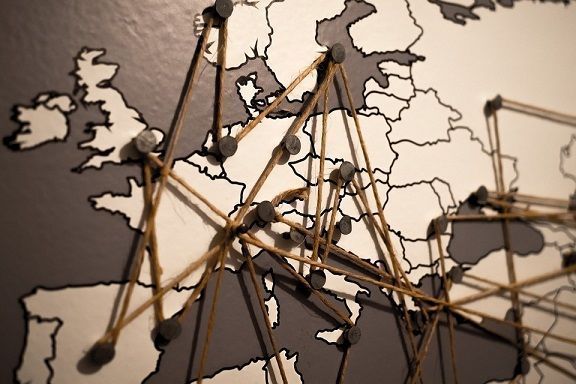
Migrant workers are individuals who work outside of their home region on a temporary basis. Migrant labor can describe any form of work done by people from another place. It can be national as well as international — workers moving around within their own country or working abroad. Migrant workers can be documented or undocumented. The key defining feature of a migrant worker is that they are alien to the community in which they work. Migrant workers are generally described as "temporary laborers" and "seasonal workers", but they sometimes hold more permanent or skilled job positions.
Migrant workers include: seasonal workers, foreign workers, business travelers, immigrants, refugees, expatriates, and students abroad.
Seasonal Workers
A seasonal worker is a worker that is brought on during a particular industry's busy season. Seasonal work includes farm labor, which is often in higher demand during harvest seasons. Retail, hospitality, and service industries often employ more temporary workers during social holidays. Not all seasonal workers are migrants, but some are.
Quite often, seasonal workers in agriculture will move with the harvest — from South to North above the equator and in reverse below the equator. These kinds of workers are frequently on the move, driven by financial pressures such as the need to send money home to their families. That means they often need to send money out of the country, and need to keep careful track of exchange rates to make the best use of what they earn.
Protections and minimum wages for temporary seasonal workers vary greatly by country. In areas with fewer regulations, migrant workers are often more vulnerable to exploitation.
Global Seasonal Worker Statistics
- The U.S is one of the biggest destinations for migrant agricultural workers, with more than 3 million migrant and seasonal workers in the industry.
- North America and Europe have the highest populations of migrant workers, at 24.7 percent and 23.8 percent respectively.
- According to the Global Workers Justice Alliance:
- There were 214 million international migrants in 2010, 105 million of whom were workers.
- In Organization For Economic Co-Operation and Development member states, composed of the 33 wealthiest world economies, temporary migrant workers outnumbered permanent immigrant workers in 2010.
- In 2010, migrants sent $440 billion home to their families through remittance.
Resources for Seasonal Workers
- MHP Salud - This is a US based organization focused on providing community health services to Latino populations.
- Employment and Development Department in the State of California - California organizes programs to assist farm workers and migrants on a range of matters including job search, disability and unemployment insurance, and legal advocacy.
- National Center For Farmworker Health - The NCFH is a private organization focused on health advocacy and education based in Texas in the US.
- International Organization for Migration - UN Migration - This is an agency of the United Nations specializing in migration, refugees, and combating human trafficking. They deliver services directly to impacted populations and countries, and they also deal with international law and the protection of migrant worker rights.
Foreign Workers
Foreign workers are a broadly defined group of people. "Foreign worker" simply means someone who enters a foreign country with intent and permission to work. Unlike migrants, foreign workers as a term generally describes documented workers with official permission to be in the country. Where migrants can often be undocumented and exploited, foreign workers generally describe a more well off group of people who maintain a relationship with the government of their home country, opening them up to concerns such as foreign accounts and tax reporting.
Working in different countries can be complicated when it comes to filing taxes. In some cases, a foreign worker might find their income taxed twice, and it's important to understand how different countries handle income tax.
Foreign Worker Statistics
- Iceland has the highest percentage of foreign born people who are currently employed, at 81 percent. The U.S places 10th on this scale, at 71 percent of foreign born persons employed. Israel and the Czech Republic place second and third on this scale respectively.
- According to the US Bureau of Labor Statistics, in 2017:
- The unemployment rate for foreign workers was 4.1 percent, compared with a 4.4 percent unemployment rate of native born US workers.
- There were 27.4 million foreign workers in the country, making up 17.1 percent of the total US workforce.
Resources for Foreign Workers
- UN Statistics for Work Permits - Describes work permits, their purpose and importance.
- How to Get Work Permits Abroad - An article detailing the process of getting work permits and working abroad.
- Project Visa - Find visa and embassy information for countries all over the world.
- Europe Double Taxation - Information about double taxation issues in the European Union.
- IRS Foreign Wage Taxes - Information on how to handle taxes for foreign workers in the US.
Business Travelers
A business traveler is a unique kind of foreign worker that enters a country temporarily in order to engage in business activity. They are not, generally, admitted under employment or immigration visas, and their stays are expected, and required, to be very short.
Business visas generally don't require an application process, but are very limited in terms of duration and allowed activities. Unlike most kinds of migrant and foreign workers, business travelers tend to be wealthy, or at least of middle class income, travelling as a representative or employee of a company with interests in other countries. These travelers attend trade shows, negotiate business deals, and engage in other business related activities for which they are compensated in their home country — they don't earn money in the country they're visiting.
Generally, business travelers have travel expenses paid by their company, and in addition are provided with a "per diem" — a daily budget for food and other living expenses. For the most part, all the related costs for the entire trip, including accommodation, are taken care of by the company. Business travelers do sometimes need to convert their own money, for other personal expenses not covered by their company. They often use remittance services to send money overseas for the purposes of personal transactions, and sometimes to convert cash per diems.
Business Travelers Statistics
- Business travel contributes $1.23 trillion to the global economy.
- Business travel contributed $286.2 billion to the US GDP in 2015.
- The Asia-Pacific region leads the world in business travel growth.
Immigrants
Immigrants are another very generally broad category of people. Put simply, they are a group of people that have moved from one country to another for the purposes of making that country their primary residence. They have many different reasons for moving, including to be with family, to get married and start a family, or just to achieve a better life. Many, but not all, immigrants are workers. Some might be dependent family members of citizens or other immigrants. Legal immigrant status in the US and in many other countries includes the right to work.
"Immigrant" is a legal status that is different from other statuses such as "refugee", "nonresident alien", "undocumented", and "student".
Immigrants also sometimes need to send money home to their previous country of residence, especially if they are applying for new visas for other family members to immigrate. The immigration process is expensive and can take a very long time, depending on the circumstances, the type of visa, and the countries involved. Many choose to immigrate ahead of their families so that they can get into the country, start working, and send money home to help their families afford travel.
As the world gets smaller, and as it becomes easier to meet people from other countries, more couples will find themselves in an international relationship, eventually requiring one of them to move. Family reunification immigration is generally considered different from work based immigration. Many countries will impose strict limits on the number of foreign workers that may enter said country, but less limitation on family visas.
Immigrant Statistics
- In the US in 2017, more than a million people were granted lawful permanent resident status and around 700,000 immigrants were granted citizenship.
- In 2017, countries classified as "high income" hosted 64% of international migrants.
- While the number of immigrants to the US has been growing, the ratio of immigrant populations to total US population has remained relatively steady.
Resources for Immigrants
- National Immigrant Justice Center - The NIJC provides assistance to immigrants in understanding and navigating their rights under US law, as well as a wide range of legal services to low income immigrants.
- The Advocates for Human Rights - This human rights advocacy nonprofit provides free legal services to immigrants and asylum seekers.
- American Civil Liberties Union - The ACLU is an organization that advocates for the constitutional rights of people in America. At their offices, immigrants can access information and resources such as legal assistance.
- Upwardly Global - An organization that assists authorized immigrants of all kinds, as well as refugees and asylum seekers, who have settled in the US to find work and start a career.
- Church World Service - A global nonprofit that provides legal services to immigrants, including help with applications for citizenship, green cards, and loan assistance.
Refugees
Refugees are defined by the United Nations as: "persons who are outside their country of origin for reasons of feared persecution, conflict, generalized violence, or other circumstances that have seriously disturbed public order and, as a result, require international protection."
Refugees are generally recognized internationally, and their innate legal protections are assumed by many (but not all) countries. Their status is defined in international law. Refugees are particularly vulnerable for a number of reasons. The main reason is that they are normally leaving their home country unexpectedly and by force of violence or other disastrous circumstance. They don't often have the means to travel far without help. Western countries like the US and Canada, as well as certain European countries, are often the destination of refugees, but few get there, more often ending up in camps close to the border of the countries they flee.
Once refugees arrive in a host country, they encounter a new set of challenges. These include acclimating suddenly to a new culture and language, finding work and a place to live, and navigating their new lives starting from scratch.
Refugee Statistics
- According to Amnesty International:
- There are 25.4 million refugees globally.
- 85% of the world’s refugees are hosted in developing nations.
- Turkey hosts the largest number of refugees, at 3.5 million.
- Lebanon hosts the highest ratio of refugees per 1000 other inhabitants.
- More than half of refugee children did not go to school in 2016.
Resources for Refugees
- Bureau of Population, Refugees, and Migration - As the main legislative body that handles refugee matters in America, the PRM Bureau also performs resettlement operations.
- Episcopal Migration Ministries - This religious charity provides assistance by welcoming refugees into communities and getting those communities involved with refugees.
- International Rescue Committee - The IRC provides resources to refugees currently in crisis, delivering support to people within unstable areas of the world. They also provide resources, assistance, and training to refugees who have been resettled in America.
- The Refugee Center Online - The Refugee Center Online allows you to search for organizations that provide refugee services in your location.
- Immigrant and Refugee Community Organization - An organization that helps immigrants and refugees adjust to their new communities and become self-sufficient.
Expatriates
An expatriate is a type of immigrant. The term generally describes someone who has moved to a new country for a job opportunity. Unlike many other immigrants, an expatriate normally performs skilled work, drawing a higher-than-average income in their host and home country alike. Expatriates are normally temporary workers who intend to return home after a certain length of time, or when their work contract expires.
Students Abroad
There are a number of universities across the world that offer programs for international students, and many countries provide special visas for students. The exchange of students between countries has been going on for a long time, and depending on the country, students receive a lot of support from the institutions involved. Many degree programs have study abroad options, or temporary travel as part of the curriculum.
Students abroad go through a wide variety of educational, work, and emotional experiences. For many of them it's their first time leaving their home country, and they may encounter culture shock. Students abroad sometimes work to help pay their expenses. They also rely on grants, scholarships, and even money from their families to help them, which often require sending money from country to country through remittance services.
Statistics on Students Abroad
- In 2016, there were over 5 million internationally mobile students.
- In 2015/2016 325,339 US students studied abroad.
- The majority of US students study abroad during the summer (38.5 percent) or for one full semester (30.7 percent).
- 54.4 percent of US students study abroad in Europe.
- Preferred foreign destinations include the United States, United Kingdom, Germany, France, and Australia.
- Minority students in the US have much less access to study abroad opportunities, over 70 percent of US students studying abroad are Caucasian.
Resources for Students Abroad
- A complete guide to studying abroad by RemitFinder.
- Foreign Government Scholarships - US Department of State - Governments of other countries also offer incentives to draw international students to their institutions.
- CIEE - Information about government and private scholarships and grants can be found on the CIEE website.
- Students Abroad - A listing of resources for students studying and working abroad.
- My World Abroad - Job, internship, and volunteer opportunities abroad. Also includes information and guides for living abroad.
- International Student - Information about international financial aid for students.
Foreign Workers and Financial Literacy
Literacy is understanding and grasp of language. Financial literacy is understanding and grasp of money, finance, and everything related. It describes someone's ability to manage their personal finances, and understand the financial forces that affect them. It can also include an understanding of investing and foreign currency. Travelling is easier than ever before thanks to the level of interconnected transportation and financial technology available to us, and travelers need to be fully prepared for the impact of travel on their finances.
For traveling and working abroad, people often have to learn a financial language. It's not just about dealing with a new currency, but a new tax system, new banks, different expenses and a different cost of living. Travelers are often targets for financial scams and theft, which they have to be savvy about identifying and protecting themselves from.
One immediate point of concern for travelers relates to and living and travel-related expenses. Traveling workers can't always start working right away, so they have to make sure they can survive until the first paycheck comes in. A financial plan for living abroad should account for different costs of living, travel expenses, and should include the cost to transfer money overseas. Exchange rates and high processing fees can have a huge impact on a traveler's finances, especially for students and temporary workers who are likely to be making multiple overseas transactions.
Financial Literacy Resources
- Annuity.org - Financial literacy and managing your money basics.
- Consumer.gov - How to create a budget worksheet.
- Mymoney.gov - Evaluate and learn about your financial wellbeing.
- Money Smart - An educational program run by the FDIC.
- USA.gov Education - Loan and financial aid resources for students.
- US Treasury Kids - Financial education activities for kids.
- Consumer Financial Protection Bureau - Finance for parents.
- Global Financial Literacy Excellence Center - A center run by George Washington University that conducts research about global financial literacy and runs educational programs.
- International Living - Website, magazine, and resource hub for overseas living, including how to find work overseas.
- Global Migration Group Study - Study on gender in financial inclusion and remittance for migration, focusing on women's financial empowerment.
- International Personal Finance - Provider of credit and loans for people abroad.
Categories


Similar Articles

Tax Treatment On Sale Of Property By NRI In India
Learn the tax implications for NRIs selling property in India. Understand key rules, deductions, and how to stay compliant with regulations.

Popular Mobile Wallets In Middle East And Africa
Explore popular mobile wallets in the Middle East and Africa and how they support financial inclusion and digital payments.

Popular Mobile Wallets In North America
Discover the most popular mobile wallets in North America and how they simplify payments, transfers, and everyday transactions.