
Delivery Methods for Money Transfer
Table of Contents
- What is a Delivery Method?
- Types of Delivery Methods
- What are various Delivery Methods available?
- Bank Account
- Multi-Currency Bank Account
- Cash Pickup
- Mobile Airtime Top Up
- Direct To Card
- Mobile Money Transfer
- Cryptocurrency Wallet
- Which Delivery Method should you use?
When you want to send money overseas, there are multiple options around how you may pay for your transfer and how your recipient receives the funds.
In this blog post, we will discuss Delivery Methods for money transfers. In an earlier blog post, we talked about Payment Methods for sending money abroad.
What is a Delivery Method?
A Delivery Method is how your recipient gets paid by your Remittance Provider (either a bank or a private institution that facilitates money transfers) for amount of the money you transfer.
A Delivery Method is how your recipient gets the money transfer amount overseas.
The aggregate amount your service provider will pay the recipient would be the amount you sent minus any applicable fees or charges that the service provider may charge you to use their money transfer service.

Now that we understand delivery method definition, we will delve into the most frequently used delivery methods, along with a short summary and advantages of each.
Types of Delivery Methods
For the purpose of receiving money overseas, you have the option to use various types of delivery methods. Generally, digital delivery methods will result in faster transactions vs non-electronic ones like cash.
Below we list various types of delivery methods.
- Monetary delivery methods like direct bank account transfers
- Non-monetary delivery methods like mobile airtime top up
- Cryptocurrency based crypto wallets
- Electronic delivery methods to receive payments online
- Non-electronic delivery methods like cash
Delivery methods can be monetary, non-monetary and cryptocurrency based, as well as electronic and non-electronic.
In the rest of this article, we will present the best ways to receive money online from overseas.
What are various Delivery Methods available?
There are numerous Delivery methods available when it comes to receiving funds overseas. Below, we discuss some widely accepted delivery methods for your remittance needs.
Bank Account
Delivering funds into a bank account involves providing the service provider with your recipient's bank account information. Once the money transfer is complete, the service provider will direct deposit funds into the provided bank account.
Direct bank deposits are also called Direct to Bank, or ACH bank deposits.
Bank Account delivery is fast and convenient whereby the recipient gets money delivered into their account for immediate use. Therefore, transfer into a bank account is the best way to receive payment online.
However, some banks levy service charges on incoming remittance amounts which will reduce the final amount the recipient gets.
Multi-Currency Bank Account
A version of a bank account is the multi-currency bank account, which is an international account that can hold multiple currencies.
A multi-currency bank account allows the account holder send and receive money, and is a great option for expats and frequent travelers who need to access their money in various currencies.
With a multi-currency bank account, your money stays in the same bank account, and there is no actual movement of money. Due to this reason, transfers made via multi-currency accounts tend to be instantaneous.
A multi-currency bank account allow you to access your money in various currencies.
Cash Pickup
The Cash Pickup delivery method usually works when service providers have an office or a local agent where your recipient would go to pick up cash for the money transfer.
Numerous global remittance companies follow this model whereby they have many worldwide locations where recipients can pick up the money transfer amount as cash. Hence, cash pickup qualifies as a face to face delivery method.
For example, you can use Western Union to receive money in locations close to your receiver. Similarly, you can rely on MoneyGram to receive money in person as well.
There are usually no additional fees associated with a cash pickup as fees were charged upstream when the sender paid for the transfer.
Also, Cash Pickup usually works as the fastest delivery method since service provider's local office or agent will have money transfer information in almost real time after the sender initiates the transfer.
Cash Pickup is a good option for sending small amounts of money abroad fast.
Cash pickup can, however, be risky, especially for large amounts. Sometimes the pickup location can also be far away from the recipient, which may cause delay or inconvenience to access funds.
Mobile Airtime Top Up
Many overseas immigrants help their families back home by doing a direct mobile airtime top up on their loved one's mobile phones. As a result, mobile airtime top up is another popular delivery method.
Remittance companies offering this delivery method usually have integrations with mobile operators in the recipient country. Once the funds are received, they are used to add mobile minutes to the recipient's mobile phone account.
This delivery method is popular with remitters sending small sums of money very regularly to their families.
Direct To Card
Direct to Card payments mean adding funds to a Visa, Mastercard or equivalent card account. Payment received on such a card can then be used by the recipient to make purchases, just like a credit or debit card.
Since this option needs integrations with global or local card providers, it tends to be a bit less popular in most countries. However, it can be a great solution to how to receive money without a bank account.
Mobile Money Transfer
In the case of the Mobile Money Transfer delivery method, the money transfer operator will transfer funds into the recipient's mobile wallet account. Such mobile wallets could be Google Pay, Apple Pay or similar national or regional providers.
An example of a really popular regional mobile wallet is GCash in the Philippines. GCash supports incoming remittances and is supported by many major money transfer companies as a delivery option for sending money to the Philippines.
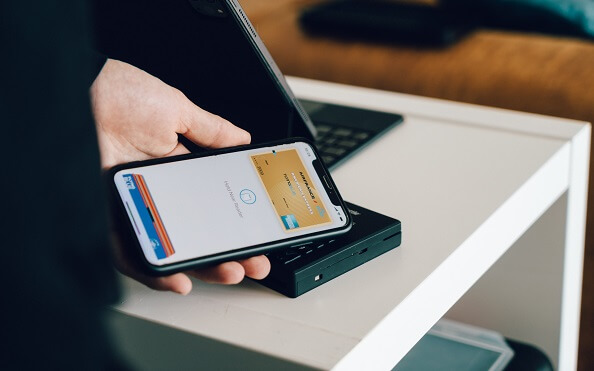
Mobile wallets are apps to send and receive money, and are a good solution to the problem of how to receive payments from abroad. The method of delivery, in this case, is to transfer funds to an app instead of a bank account.
With the funds in their mobile wallet, the recipient can do contactless purchases as well as online transactions. Since there is no need to use a credit card, debit card or bank account, there is maximum privacy and security guarantee.
Cryptocurrency Wallet
Moving money into a cryptocurrency backed digital wallet is a new way to deliver money to an overseas recipient. This usually works for sending cryptocurrency to someone else.
Cryptocurrency transactions and transfers continue to become more popular as time goes by. In fact, they can be a lifeline in case of political or economic turmoil, and other circumstances when normal national currencies can crumble.
The use of cryptocurrencies is expected to continue to grow.
We expect the usage of cryptocurrency, especially as a means to send money abroad, to grow with time. As such, cryptocurrency based future delivery methods should continue to gain popularity going forward.
Which Delivery Method should you use?
The choice of the most appropriate delivery method for your money transfer depends on the situation at hand.
For example, if you need to send money fast, cash pickup may be a good option. However, it is difficult to handle larger money transfers with cash.
To move large sums of money internationally in a secure manner, electronic delivery methods like direct bank transfers might be an attractive option.
Finally, you may also want to research and compare various money transfer companies to see which delivery methods they support. This will help you find the providers that best fit your remittance needs.
Categories


Similar Articles


US Big Beautiful Bill's Impact On Remittances
The Big Beautiful Bill has been passed in the US, and remittances are impacted. Learn how the Bill impacts remittances and what to do if you are affected by the new law.

Bangladesh Remittance Cash Incentive: All You Need To Know
Learn how Bangladesh's remittance incentive works and how you can earn an extra 2.5% when sending money home from abroad.
The Ins And Outs Of International Mobile Money Transfers
Learn how international mobile money transfers work, including fees, security, and tips to send money abroad using your mobile device.