
How To Save On B2B International Transfer Fees
Table of Contents
- Why Is International Banking With Traditional Banks Challenging?
- High Fees And Hidden Costs
- Limited Currency Options
- Inefficient Payment Systems
- Sanction Checks And Payment Delays
- Limited Customer Support
- Are There Alternatives To Banks For B2B International Payments?
- How Does MultiPass Help Cut Cross-Border Payment Costs?
- Stop Losing Money To FX
- Take Advantage Of Local Payouts In 18 Currencies
- Save On Multiple Account Maintenance Fees
- What Are Some Key Features Of MultiPass?
- Conclusion
In today's global economy, businesses increasingly find themselves operating on a global level. Either directly or indirectly, many businesses deal with customers, partners, suppliers and vendors from other countries.
As the business-to-business (B2B) sector's demand for cross-border transactions grows, businesses face a significant challenge: the dominance of traditional banks with their slow and outdated systems often stifles fast, cost-effective and efficient ways to make payments overseas.
In today's fast-paced environment, companies expect cross-border B2B payments to mirror the efficiency and cost-effectiveness of retail banking, particularly when dealing with international clients, sourcing goods overseas, or paying remote employees.
Reliance on traditional banks or other slower and older systems is problematic for businesses engaging in frequent international transactions, especially in foreign currencies. Traditional banking methods often lead to inefficiency and excessive costs, with many businesses unknowingly incurring losses.
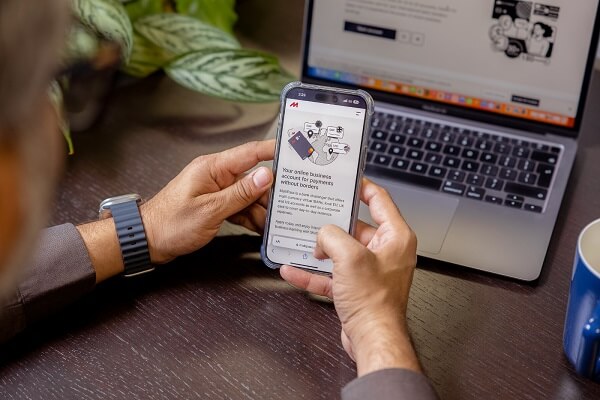
In this article, we will present some of the problems that today's businesses face when it comes to cross-border payments. We will also touch upon MultiPass as a viable option to overcome those problems.
Why Is International Banking With Traditional Banks Challenging?
Here are some of the key issues associated with international banking done through traditional banks.
High Fees And Hidden Costs
A startling reality for businesses is the lack of transparency in banking fees. According to a Mastercard report1, 36% of small business owners admit that there is no transparency about how much money they lose in foreign exchange and transfers fees.
In reality is not rare to lose up to 40 GBP per payment, or more, even for a small international payment - a cost that often remains hidden as it is deducted from both the sender and receiver ends or included in the marked up exchange rate.
Why Are Banks So Expensive?
Historically, banks operated in a near-monopoly environment where limited competition allowed them to charge premium fees for their services.
Before the entry of new fintech and e-money services into the banking field, this lack of competition meant that customers had few alternatives when it came to international payments, giving banks significant pricing power.
Moreover, banks are not quite transparent about the costs of international money transfers.
Lack of competition and historical monopolistic environment led to banks charging high fees and providing inferior exchange rates for international money transfers and payments.
Customers often prefer to use their own banks for all financial services, including international transfers, due to convenience and trust. Banks might leverage this loyalty and the convenience factor to charge higher rates, knowing that many customers will pay for the ease of service.
One best practice that we recommend to anyone who needs to send money overseas is to compare exchange rates and various options before deciding how and when to remit funds abroad.
An easy and seamless way to do this is by using RemitFinder's online money transfer comparison platform. RemitFinder compares many remittance providers to get you the best exchange rates and deals on international money transfers.
Limited Currency Options
International business is usually not the main focus of traditional banks.
Hence, banks usually offer limited currency options, restricting businesses' ability to trade globally to the most popular world currencies or those of neighboring countries.
Banks rely on relationships with other banks across the globe to facilitate international money transfers. If your bank does not have a partnership with a bank in a particular country or one that deals in a specific currency, it may not be able to send money in that currency.
Inefficient Payment Systems
Banks typically use the SWIFT network for sending international payments.
SWIFT transactions often involve multiple intermediary banks, especially when the sending and receiving banks do not have a direct connection. The fact that there can be many intermediaries involved often leads to long transaction times.
As a result, businesses may experience delays in receiving funds or paying suppliers, affecting their relationships and cash flow.
Bank transfers are based on the SWIFT network which can cause delays due to multiple intermediary institutions involved.
Sanction Checks And Payment Delays
The political climate nowadays is becoming increasingly tense, and banks must navigate a complex array of new regulations that vary significantly from one country to another.
Each intermediary bank processing the payment has to perform the necessary security checks, causing significant operational delays.
Limited Customer Support
Banks often provide limited support, especially to smaller businesses, which can be detrimental in resolving urgent matters.
Banks often allocate more resources and personalized attention to larger, more profitable corporate clients. From a bank's perspective, the cost of providing extensive personal support to small businesses might not align with the perceived benefits.
Getting in touch with a cross-border payment specialist at a bank can be challenging, especially with busy customer service hotlines and email support, where each time you might encounter a new representative who is not familiar with your specific situation.
From inferior exchange rates to high fees to slower transaction speeds to slow customer support response, banks pose many challenges to businesses that need to make cross-border payments.
Are There Alternatives To Banks For B2B International Payments?
The cross-border business payment landscape began to change with the introduction of regulatory directives like the Revised Payment Services Directive2 (PSD2) and similar measures worldwide. These directives aimed to break the bank monopoly by opening doors to new entrants in the financial industry.
As a result, innovative fintech companies and online payment providers emerged, offering more cost-effective and transparent solutions for international payments.
In this evolving market, Electronic Money Institutions (EMIs) have made their mark, entering the banking space to offer alternatives and foster financial inclusivity in a domain still dominated by traditional banks.
EMIs often specialize in specific areas. For instance, while some focus on payment processing for e-commerce businesses, and others on accounting software and tools for startups and young entrepreneurs.
Many fintech companies and startups have emerged to challenge the historical domination that banks held over the international money transfer ecosystem.
One such innovative solution that stands out with its multi-currency accounts designed for businesses with cross-border payment needs is MultiPass. Using MultiPass, businesses can rapidly expand into new markets as the solution offers significant savings on international transfers.
How Does MultiPass Help Cut Cross-Border Payment Costs?
Here is how businesses can take advantage of MultiPass to save on cross-border payments and international banking needs.
Stop Losing Money To FX
When banks make an international payment in a foreign currency, they not only charge you a transfer fee but also a foreign exchange charge, hidden in the exchange rate markup which is often as high as 2-3%.
Ideally, you should look for better exchange rates as even a 1% difference can make a huge impact on your bottom line, especially if you are making high-value international payments.
Let us illustrate a simple case where you are making an international payment from the United Kingdom to Hong Kong for 200,000 HKD worth of goods purchased from your supplier based in Hong Kong.
- Mid-market Rate: 1 GBP = 9.95 HKD
- Online bank rate (1% Markup): 1 GBP= 9.85 HKD
- Traditional Bank rate (3% Markup): 1 GBP= 9.65 HKD
This means that to complete this transaction with a traditional bank, you would need GBP 20,725.39. However, if you use an online bank, you would only need GBP 20,304.57.
By choosing the better exchange rate provided by an online bank, you can save GBP 420.82, which would otherwise go as profit to the traditional bank.
MultiPass offers exchange rates that are significantly more competitive than those typically found at banks. The company customizes its rates for each customer, taking into account their expected volumes in multi-currency transactions.
Take Advantage Of Local Payouts In 18 Currencies
Typically, when using traditional banks, your funds are transferred as a SWIFT payment through an international network of banks, incurring a fee, often ranging from GBP 15-25 or higher.
With MultiPass, you can send payments in GBP, EUR, USD, AUD, CAD, CZK, DKK, HKD, HUF, IDR, INR, MYR, NOK, PHP, PLN, RON, SEK or SGD via local banking channels starting at just GBP 0.50 per transaction.
This not only saves you money but also expedites the process.
Traditional bank payments often go through multiple intermediaries before reaching the recipient, resulting in a common delay of 3-7 days before the recipient receives the funds.
In contrast, local payments are typically processed within hours or a business day.
With MultiPass, you can send international payments in 18 global currencies with fees as low as GBP 0.50. Transactions also finish much faster than traditional bank transfers.
Save On Multiple Account Maintenance Fees
With MultiPass, businesses can operate a single account across multiple markets, eliminating the need for maintaining multiple accounts in different countries. This consolidation significantly reduces administrative burdens and associated costs.
With everything in one account, it is much easier to oversee and manage your funds in different currencies. You will find it simpler to keep track of your finances.
Moreover, you do not need to travel or go through lengthy onboarding processes with traditional banks requiring your physical presence every time you wish to try new markets.
MultiPass makes expanding your business abroad easier and less costly. You can start receiving payments conveniently from new foreign clients, whether they are from the US, UK, EU or other regions.
What Are Some Key Features Of MultiPass?
Along with the essential savings through better exchange rates and local payments, MultiPass offers several additional advantages as listed below:
- Online onboarding: The end-to-end new client onboarding process happens online, including the digital identity verification, making it easy to apply 24/7 though from any global
- Local account details: MultiPass provides you with IBANs along with US, UK, and EU account details in your company's name. You can incorporate these into your invoices to receive payments in a quicker, more cost-effective way - similar to how local companies do it.
- Business acceptance: MultiPass is open to businesses from the UK, EU, UAE, and some other regions, accommodating a variety of company structures and international business owners.
- Personal support: Each customer is assigned support personnel, available for assistance and advice through phone, messengers, or email, aiming to provide a convenient service experience.
- Global payment reach: The service offers transaction capabilities in over 30 currencies and extends to more than 180 countries, enabling a wider range of international business activities.
- Payment card options: MultiPass offers both virtual and physical payment card options, providing secure and adaptable financial management tools.
- Multi-user access and features: The platform includes multi-user access with different permission roles, payment drafts, and other functionalities for convenient management of funds.
Conclusion
Businesses face many challenges when making cross-border payments that are fast, easy and cost-effective. Traditional banks have been the main vehicle for international B2B transfers, but banks charge high transfer fees, provider lower exchange rates and have limited coverage.
In recent times, many fintech startups, money transfer companies, challenger banks and other such online payment institutions have started offering alternatives to international bank transfers.
One such great alternative to traditional banks in MultiPass, an online payments company that streamlines B2B international payments for businesses. By providing much better exchange rates, lower fees, fast payments, convenient onboarding and dedicated customer support, MultiPass aims to streamline overseas payments for businesses.
Do You Need To Find the Best Remit Exchange Rate for Sending Money Internationally?
RemitFinder is an online service that helps you track remit exchange rates. By checking and comparing the latest remit exchange rates, you can get the best exchange rate for your money transfers. RemitFinder, thus, helps you to get the best return for your hard-earned money.
Find the cheapest rate to transfer your hard-earned money - visit our site or download the app on Google Play or Apple App Store now.
Want to explore by country? Browse all destination countries on our send money to hub or sending countries on our send money from hub.
References:
1. Mastercard's Borderless payments report 2022
2. Wikipedia article on Revised Payment Services Directive (PSD2)
Categories


Similar Articles


Uzbekistan Money Transfers with Profee
Compare Profee's fees and exchange rates for Uzbekistan transfers, learn how transfer speed and security work, and follow five steps to send your first payment.

Wise vs Revolut: What Are The Differences?
Compare Wise vs Revolut on fees, exchange rates, features, and more. Find out which provider is better for your international money transfers.

How To Save Money On Transfers From Europe To India
Are you looking to send money from Europe to India? Check out our guide on how to save money on your international money transfers to India from Europe.