
5 Key FX Concepts You Need to Know
Table of Contents
- What is FX or Forex?
- What are Ask (Buy) and Bid (Sell) FX Rates?
- What is FX Spread?
- What is a mid-market exchange rate?
- What is FX Markup?
- How is FX Markup calculated?
- Why should I care about FX Markup?
- How can FX Markup be used to compare money transfer services?
- What is FX Margin?
- Conclusion
If you deal with foreign exchange, currency exchange rates and inter-conversion of currencies, there are a few key concepts that you should know of.
These include Bid/Ask FX Rates, Mid-market or Interbank Rate, FX Spread, FX Markup and FX Margin. The knowledge of these important FX terms will help you in making more informed FX related decisions.
Before we get started, let's first understand what FX is and what it is used for.
What is FX or Forex?
FX stands for Foreign Exchange, and broadly refers to any types of transactions that involve 2 different currencies.
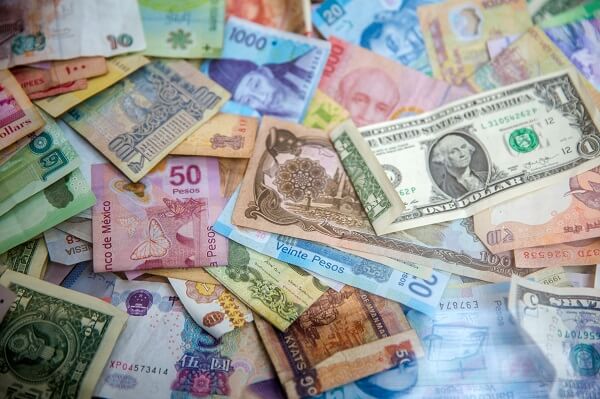
All the below scenarios, for example, will involve currency conversion, and hence qualify as FX transactions.
- You travel overseas for a holiday and pay in local currency with your credit card.
- You purchase goods online from an overseas supplier who charges in their local currency.
- You work overseas and are sending money back home to help your parents invest in real estate in your home country.
- You conduct business with an overseas company, and they invoice you in their local currency.
- You are an international student who is studying abroad and receiving money from your family back home.
- You are an expat settled abroad and send money to help your family and relatives back home.
- You are an FX trader, broker or professional who makes a living trading currencies.
In the global world we live in today, it is not rare that you may encounter one or more of the above scenarios. Hence it is important to understand some important concepts about FX transactions.
Another shorthand term used for FX or Foreign Exchange is Forex.
FX, Forex and Foreign Exchange are all synonymous terms.
Given the above, many of the FX terms like FX Markup, FX Spread and FX Margin have their corresponding synonyms as listed below.
- FX Markup, or Forex Markup, or Foreign Exchange Markup
- FX Spread, or Forex Spread, or Foreign Exchange Spread
- FX Margin, or Forex Margin, or Foreign Exchange Margin
In this blog post, we will use the FX variants of the above terms for brevity.
Also, it may seem at first some concepts like FX Markup, FX Spread and FX Margin are the same terms. Whilst they all apply in the Forex arena, and are ways to understand FX transactions better, there are differences.
Many FX terms like FX Markup, FX Spread and FX Margin may seem similar, but there are differences in what they mean and how they are used.
With some basics out of the way, we are ready to define and explain many key FX concepts, and cover everything you need to know to use these concepts effectively.
Specifically, we will discuss the below key FX related terms.
- Ask (Buy) and Bid (Sell) FX rates
- Mid-market or interbank exchange rate
- FX spread (and its measurement unit called a pip)
- FX Markup
- FX Margin
Let's dive in!
What are Ask (Buy) and Bid (Sell) FX Rates?
When currencies get traded, there are usually 2 exchange rates quoted - these are called the Bid (Sell) rate and the Ask (Buy) forex rates.
The Bid (Sell) price is the price you get if you sell the base currency to buy the other currency, and the Ask (Buy) price is the price you pay if you buy the base currency with the other currency.
Generally, the Ask (Buy) price is higher than the Bid (Sell) price. This is due to the fact that the FX broker or institution wants to make its profit in the currency exchange.
Let's take an example of EUR to CAD currency conversion for a Germany to Canada foreign currency exchange transfer.
An FX broker, or your bank, may quote the below bid/ask rates for this currency exchange:-
- Bid (Sell) rate of 1 EUR = 1.3609 CAD
- Ask (Buy) rate of 1 EUR = 1.3703 CAD
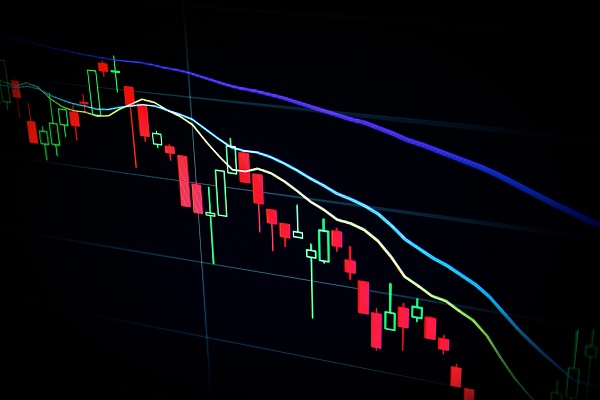
As a consumer, this means the following for you:-
- If you have EUR and want to buy CAD, you will be able to do so at the Bid (Sell) rate of 1 EUR = 1.3609 CAD. In other words, you get less Canadian Dollars for each Euro you have.
- If you have CAD, and want to buy EUR, you will be able to do so at the Ask (Buy) rate of 1 EUR = 1.3703 CAD. You, thus, have to pay more Canadian Dollars to get each Euro.
What is FX Spread?
The difference between the Bid (Sell) and the Ask (Buy) prices is called FX Spread for that currency pair.
In our EUR/CAD example above, the difference in the Bid (Sell) and the Ask (Buy) prices is 0.0094, which is the FX Spread for this scenario.
FX Spread is the difference between the Bid (Sell) and Ask (Buy) exchange rates for a currency pair.
Note that FX spread may sometimes also be called currency conversion spread, or even exchange rate spread. That said, the term FX Spread is much more widely used.
What is FX Pip Spread?
A pip is a unit of measurement generally used to demonstrate Forex Spreads. A pip is equal to 0.0001 units of currency, and is a convenient way to express spread in forex transactions.
In our prior example, we had calculated the EUR/CAD FX Spread to be 0.0094 (the difference between the bid and ask rates for that currency pair).
Expressed in pips, the same FX Spread would be 94 pips (0.0094 / 0.0001 = 94). We can, therefore, say that the EUR/CAD FX Spread is 94 pips.
As you can see, it is easier to say 94 pips instead of 0.0094. A pip is, thus, an easier and convenient way to talk about FX Spreads.
It is not uncommon for FX Spread between popular global currencies to be in single digits only. In other words, the differences between ask and bid prices are only in the 4th decimal place!
A pip is FX Spread represented as multiples of 0.0001 units of currency.
Why should I care about FX Spread?
If you are an FX Trader or an organization dealing with FX transactions on a regular basis, you would want to keep an eye on the FX Spread and time your transactions as best as possible to get the best exchange rates.
If you are an individual consumer who needs to send money abroad, you generally do not have to worry about FX Spread as it is not something you will get to know or be exposed to during your remittance transaction process.
You would, instead, want to focus your energy more on comparing various money transfer operators and choose the best one for your needs.
But regardless, it is useful to know how FX rates work behind the scenes, and now you have the knowledge.
What is a mid-market exchange rate?
Mid-market exchange rates are rates used by large banks and financial institutions to trade huge amounts of money, and are generally not available to consumers.
Mid-market exchange rates are also called interbank exchange rates.
The mid-market exchange rate is the midpoint of the Bid-Ask (Sell-Buy) exchange rates. Going back to our example, the EUR/CAD mid-market rate can be calculated as below.
Mid-market EUR/CAD rate = (1.3609 + 1.3703) / 2 = 1.3656.
This is typically the rate you would see on XE.com and other financial and news sites.
The mid-market (or interbank) exchange rate is the midpoint of the Bid (Sell) and Ask (Buy) exchange rates.
What is FX Markup?
When you make a foreign exchange (FX) transaction, an institution has to clear it by exchanging money between your local currency and the foreign currency. Such an institution could be a bank, credit card company, money transfer operator (MTO), an FX broker, etc.
The clearing institution will typically charge a foreign currency exchange commission fee to calculate the exchange rate needed to clear the transaction.
In other words, you will get an inferior exchange rate in comparison to the mid-market or the interbank exchange rate.
FX Markup is a representation of the above mentioned currency exchange fee that you will get charged on your FX transaction.
FX Markup is a way to calculate and represent the currency exchange fee that you pay on foreign currency transactions.
In the next section, we show how FX Markup is calculated. We also present an example so it's easy to understand the calculation.
How is FX Markup calculated?
Let's assume that you live in the UK, and traveled to Germany for a vacation. Whilst overseas, you used your credit card to make purchases in Germany in Euros.
Obviously, your credit card company will charge you a foreign exchange rate fee for your foreign currency spending. They will calculate an FX rate that is profitable to them while trying to stay competitive in their industry.
Let's assume the below for your transactions on a particular day of your trip.
- Mid-market GBP/EUR rate is 1.1930
- Your credit card company will apply exchange rate for GBP/EUR at 1.2108
This means that big banks and financial instructions can purchase 1 GBP with 1.1930 EUR. But since your credit card company is charging you currency exchange fees, the rate you get it worse. In our example, you have to pay a higher price of 1.2108 EUR to purchase 1 GBP.
The difference in the above rates is 0.0178 (1.2108 minus 1.1930).
FX Markup is defined as the difference between the mid-market rate and the rate you get as a percentage of the mid-market rate. Below we list the formula for calculating FX Markup.
FX Markup = (Transaction rate - Mid-market rate) / Mid-market rate * 100
Applying this formula, we get an FX Markup of 1.49% (0.0178 / 1.1930 * 100). In other words, the foreign currency conversion fee charged by your credit card company is a 1.49% FX Markup.
Why should I care about FX Markup?
At first glance, it may seem like FX Markup is just a derived mathematical number from your FX transaction. This may make it feel like it is not that important as it is not a unique data point in itself.
However, a big advantage of FX Markup is that you can easily compare various institutions using it to see which one charges lower currency exchange charges.
In our prior example, your credit card company charged an FX Markup of 1.49%. Let's assume that your bank in the UK provides you Euros as cash at an FX Markup of 1.25%.
This means that you could have saved money by carrying Euros as cash for your trip and paying with cash when you were overseas. This is because you would have paid a lesser international currency conversion fee to your bank as compared to what you paid your credit card company.
FX Markup can be used as a handy tool to compare various FX providers and their services.
In the next section, we will show you how you can compare money transfer services by comparing the FX Markup they charge.
How can FX Markup be used to compare money transfer services?
In this section, we will demonstrate how you can use FX Markup to effectively compare various money transfer services.
Let's consider Provider A and Provider B with the below exchange rates and fees for a UK to Philippines (GBP/PHP) money transfer.
- Provider A charges GBP 0 fee and has a GBP/PHP exchange rate of 68.0013
- Provider B charges GBP 6.00 fee and has a GBP/PHP exchange rate of 68.2534
We capture the FX Markup calculations for both providers in the below table for a GBP 1000 money transfer. Let's also assume that the mid-market exchange rate on the day of these transactions is 1 GBP = 68.5712 PHP.
| FX Provider | Fee | Rate | Payout | Effective Rate | FX Markup |
|---|---|---|---|---|---|
| Provider A | GBP 0.00 | 68.0013 | PHP 68,001.30 | 68.0013 | 0.83% |
| Provider B | GBP 6.00 | 68.2534 | PHP 67,843.88 | 67.8439 | 1.06% |
Based on this calculation, we can see that Provider A is giving more value for your money as compared to Provider B.
There may, of course, be numerous other factors to consider when making your money transfer decisions, but if rates and fees were the only concern, you know which company to go with.
To demonstrate the usefulness of FX Markup further, let us do another calculation. This time, we will assume you want to send GBP 10,000. Everything else being the same, the below table represents the calculations with the new sending amount of GBP 10,000.
| FX Provider | Fee | Rate | Payout | Effective Rate | FX Markup |
|---|---|---|---|---|---|
| Provider A | GBP 0.00 | 68.0013 | PHP 680,013.00 | 68.0013 | 0.83% |
| Provider B | GBP 6.00 | 68.2534 | PHP 682,124.48 | 68.2124 | 0.52% |
This time, Provider B is providing the best results with the lowest markup!

With the above analysis, you can see the value of FX Markup in showing which company charges more or less based on variations in sending amount, exchange rates and transfer fees.
FX Markup can easily show which provider gives the most value for your money.
This is an important insight as you may be tempted into making simplistic decisions as below.
- You prefer to send money with the provider with the highest exchange rate and, therefore, check currency exchange rates only without paying attention to fees and other criteria.
- You prefer to only send money with the company that charges low fees.
- You do not like to pay transfer fees and prefer sending money only with companies that charge 0 fees.
As demonstrated by our case studies, once you add FX Markup in your decision making process, you will have more data to make better decisions.
FX Markup helps you figure out how much is the effective fee for currency exchange without any ambiguity.
What is FX Margin?
FX Margin is a concept that applies to FX trading, and is the amount of money that you have to deposit with the FX broker to initiate a trade.
In other words, FX Margin is the minimum amount that your FX broker will require as a collateral or a security to allow you to place an FX trade.
FX Margin is the minimum deposit you have to provide to an FX broker to initiate a trade.
FX Margins are generally expressed as a percentage of the trading amount. For example, if you wanted to place a USD 100,000 trade, and your FX broker enforces a 2% margin, you would need to deposit USD 2,000 in your account before you can place the trade.
It is important to note that FX Margin is not a fee or cost, but rather a part of the account in which your FX trades are executed. Margin in forex has impacts on how much leverage you have, and potential liquidity and risk.
Why should I care about FX Margin?
If you are an FX trader placing FX trades with an FX brokerage organization, you need to be aware of FX Margin.
Margin trading lets you start placing trades with a small amount, and can help tap into a bigger net of FX trading with just a small amount. This can help amplify your gains. However, it can also expose you to more risk, so it is a double edged sword.
Conclusion
If you deal with FX transactions in any way, either as an individual consumer or as a business or as an FX trader, you want to be aware of all the right industry terminology. This will help you understand concepts better, and apply them to your advantage.
We have tried to capture all the important FX related concepts in this blog, and hope that you have enjoyed reading this.
If you are an individual or business sending overseas remittances, you would certainly want to search and compare money transfer companies. With so many choices available, it helps you have an online remittance comparison platform that compares various companies in an easy to consume manner.
Want to explore by country? Browse all destination countries on our send money to hub or sending countries on our send money from hub.
Categories


Similar Articles


US Big Beautiful Bill's Impact On Remittances
The Big Beautiful Bill has been passed in the US, and remittances are impacted. Learn how the Bill impacts remittances and what to do if you are affected by the new law.

Bangladesh Remittance Cash Incentive: All You Need To Know
Learn how Bangladesh's remittance incentive works and how you can earn an extra 2.5% when sending money home from abroad.
The Ins And Outs Of International Mobile Money Transfers
Learn how international mobile money transfers work, including fees, security, and tips to send money abroad using your mobile device.